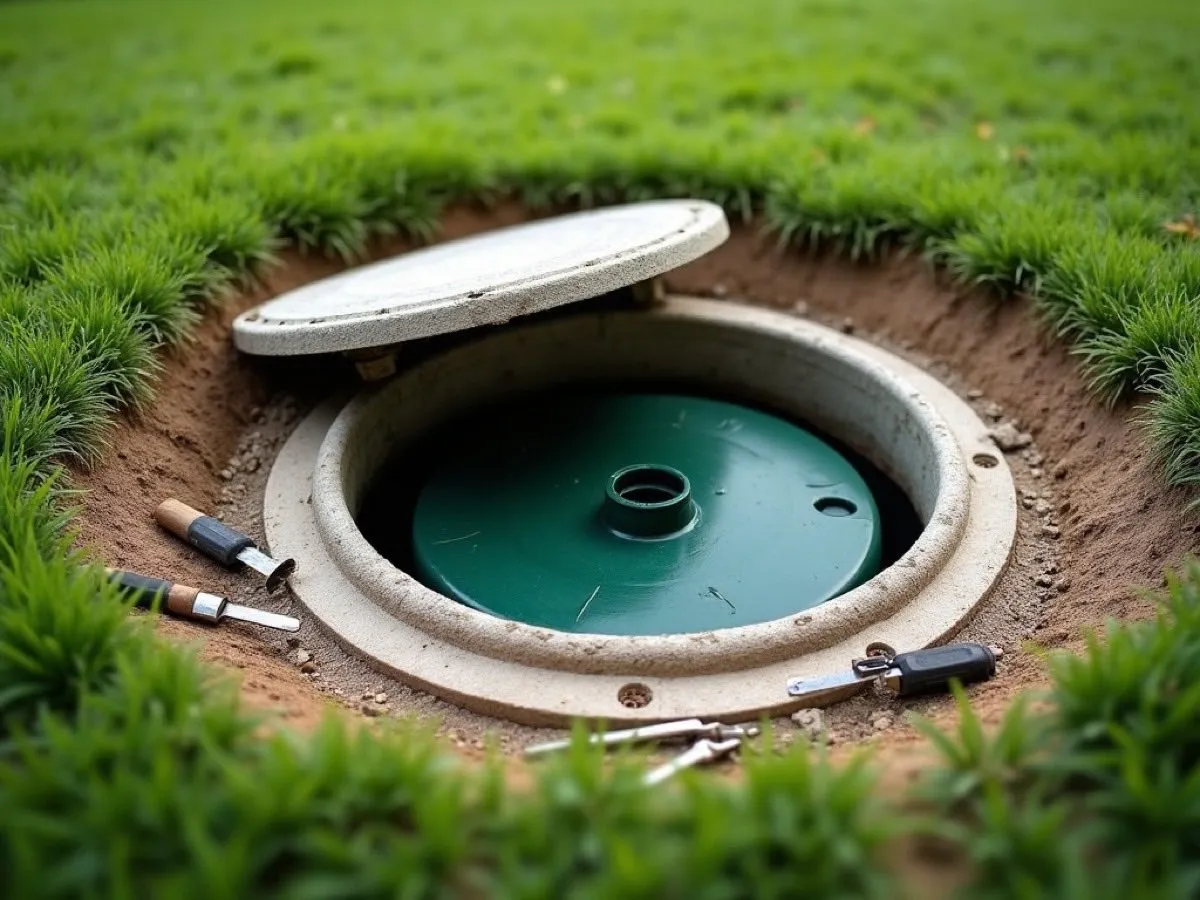
A septic tank is always "full" of liquid - that's normal. The problem starts when it's full of solids. Sludge builds on the bottom, grease forms a scum layer on top, and the settling space in between gets squeezed thinner. Once that happens, solids start riding out toward the drainfield, and the system tells on itself in some very recognizable ways.
Here are the six signs, what each one means underground, and which ones mean stop reading and call.
Six Signs Your Septic Tank Is Full
1. Slow drains all over the house
One slow sink is a clog. Every drain slow - tubs, toilets, kitchen, washer - means the problem is downstream of all of them. The tank is too full to accept water at normal speed, so everything in the house stacks up behind it. This is the classic early sign and the best time to act.
2. Gurgling pipes
That blub-blub sound after you flush is air. When a tank is near capacity, water entering the system has to fight for space, and the air it displaces burps back up through your drains. An occasional gurgle after heavy use is a nudge. Constant gurgling is a shove.
3. Sewage smell inside or outside
A working system keeps sewer gases moving through the tank and out the roof vent. When the tank fills up, gases escape wherever they can - through drains inside, or up through the ground over the tank and drainfield. A faint whiff near the lid on a hot day can be normal. A smell that hangs around isn't.
4. Standing water or spongy ground over the drainfield
When an overloaded tank sends water and solids out faster than the field can absorb them, effluent rises to the surface. The ground over the field turns soft and spongy, then puddles even in dry weather. Around New Bern this one needs a caveat: our water table rides high from roughly December through April, so a soggy yard in February could just be groundwater. Soggy ground that smells like sewage is the system.
5. Stripes of bright green grass
Grass over the field lines that's noticeably greener and faster-growing than the rest of the lawn is being fertilized from below. Partially treated wastewater is rising toward the roots instead of soaking down through the soil. It looks healthy. It isn't.
6. Sewage backing up into the house
The end stage. The tank has nowhere to put incoming water, so it goes the only direction left - back up the pipe and into your lowest drains, usually a tub or floor drain. This is a health hazard, not a wait-and-see.
Which Signs Mean Call Now vs. Schedule Soon
Call now - this is a same-day problem:
- Sewage backing up into tubs, showers, or floor drains
- Sewage pooling on the ground surface
- Multiple fixtures backing up at the same time
- A septic alarm sounding (common on pump and STEP systems)
These mean wastewater has nowhere to go. Stop running water and call for emergency septic pumping.
Schedule soon - think days, not months: slow drains house-wide, regular gurgling, a persistent odor, spongy ground, or green stripes over the field. These are the warning shots before a backup. A routine pump-out at this stage usually costs a few hundred dollars and resets the clock.
Full Tank or Failing System?
Here's the honest part: every one of these symptoms can also point to a drainfield problem, a crushed pipe, or a failed baffle - not just a full tank. The way to find out is to pump the tank and look. If the symptoms disappear after pumping, it was capacity. If water flows back into the tank from the outlet, or the field stays soggy, there's a bigger conversation to have.
Either way, pumping is the right first step. It buys time, confirms the diagnosis, and it's the cheapest item on the septic repair menu.
Don't Wait for the Warning Shots
The signs your septic tank is full usually show up after the ideal pump-out date has already passed. The cheaper path is staying ahead of them: follow a pumping schedule based on your household and tank size, and keep grease, wipes, and other troublemakers out of the system - our guide on what not to flush covers the full list.
Seeing one of these signs right now? We're serving New Bern and Craven County with same-day and next-day appointments available, and the price we quote is the price you pay.