Most of the septic problems we see around New Bern started the same way: the tank went too long between pump-outs. Sludge crept up, solids slipped into the drain field, and what should have been a few-hundred-dollar service call turned into a four-figure repair.
New Bern Septic Pros handles septic tank pumping in New Bern, NC and across Craven County with upfront pricing: the price we quote is the price you pay. Same-day and next-day appointments are available when your tank can't wait.
We pump conventional tanks, pump tanks on STEP and other pump-assisted systems, and neglected tanks that haven't been opened in a decade. If you just bought a place and have no idea what's buried in the yard, we'll find it.
What's Included in Every Pump-Out
A proper pump-out is more than sticking a hose in the tank and driving off. Here's what you get on every visit:
- Lid location and access. We find the tank and uncover the lid, even when it's buried under sod.
- Sludge and scum measurement. We measure both layers so you know how full the tank actually was, and how long you can safely go before the next service.
- Complete pump-out. Liquids and solids, the whole tank, not just the easy liquid on top.
- Backflush and rinse. We backflush to break up the compacted sludge stuck to the floor and corners, then pump it out.
- Inlet and outlet baffle check. Broken baffles let solids escape into the drain field, where the real damage happens. We check both.
- Effluent filter cleaning. If your tank has a filter, we pull it and clean it before closing up.
- Condition notes. You get plain-English notes on what we found (water level, cracks, roots, baffle condition), so nothing sneaks up on you later.
Do You Need a Pump-Out?
If any of these sound familiar, it's time to get on the schedule:
- It's been three or more years since the last pump-out, or you can't remember when that was
- Drains are slow, or you hear gurgling from more than one fixture
- Sewage smells inside the house or out near the tank
- Soggy ground or a stripe of bright green grass over the drain field
- Sewage backing up into tubs or floor drains — that one can't wait; head to our emergency septic pumping page or just call
Not sure what you're looking at? Our guide to the signs your septic tank is full walks through each warning sign in detail.
Local note: Much of the soil around New Bern has a tight clay subsoil with a seasonal water table just two to three feet down in winter and spring. That shrinks the working capacity of your tank and drain field, one reason coastal-NC pros often recommend pumping every 2–3 years instead of the standard 3–5.
How Much Does Septic Tank Pumping Cost in New Bern?
Most standard residential pump-outs in the New Bern area run about $250 to $500, in line with eastern North Carolina pricing. Tank size is the biggest factor:
| Tank size | Typical NC price range |
|---|---|
| 750 gallons | About $175–$300 |
| 1,000 gallons | About $245–$400 |
| 1,250 gallons | About $280–$475 |
| 1,500 gallons | About $300–$600 |
Don't know your tank size? Don't guess: most single-family homes around here have 1,000-gallon tanks, and the county permit record usually lists yours.
A few things can add to the bill: digging out a deeply buried lid (roughly $25–$75), hose runs past about 100 feet ($50–$100), weekend service ($50–$100), and replacing a damaged effluent filter ($75–$200). We flag every add-on before work starts — never after. For the full breakdown, see our septic pumping cost guide.
Pumping and Cleaning: You Need Both
Some companies treat "pumping" and "cleaning" as separate line items. Pumping pulls out the liquid and the floating layer, the easy material a vacuum hose grabs on its own. Cleaning goes further: backflushing water into the tank to break loose the dense sludge packed on the bottom, then pumping all of it out.
We do both on every standard visit, at one price. A tank that only gets pumped can leave several inches of hardened sludge behind, which means you paid for capacity you didn't get back.
What to Expect on Service Day
Plan on about 45 minutes to an hour for a typical tank (longer if the lid is buried deep or the hose run is long). You don't need to be home as long as we can reach the tank, though most folks like a quick rundown of the condition notes when we finish.
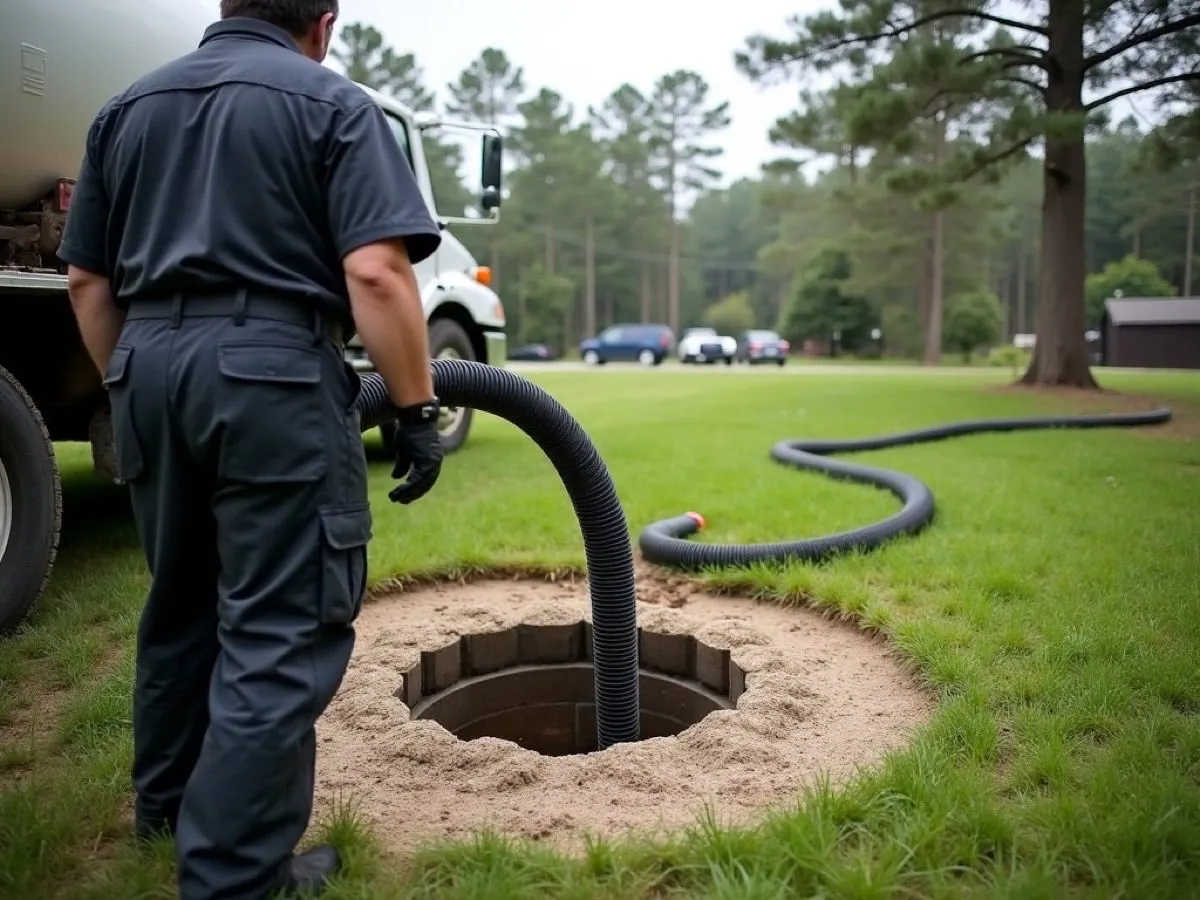
The truck stays on the street or driveway, and we run hose to the tank, so your yard stays intact. Lids get exposed by hand, and the soil goes back when we're done.
Before we leave, we'll help you set the right interval for your household. Our guide on how often to pump a septic tank covers what changes the math. Or skip the homework and ask us to put you on a reminder schedule.