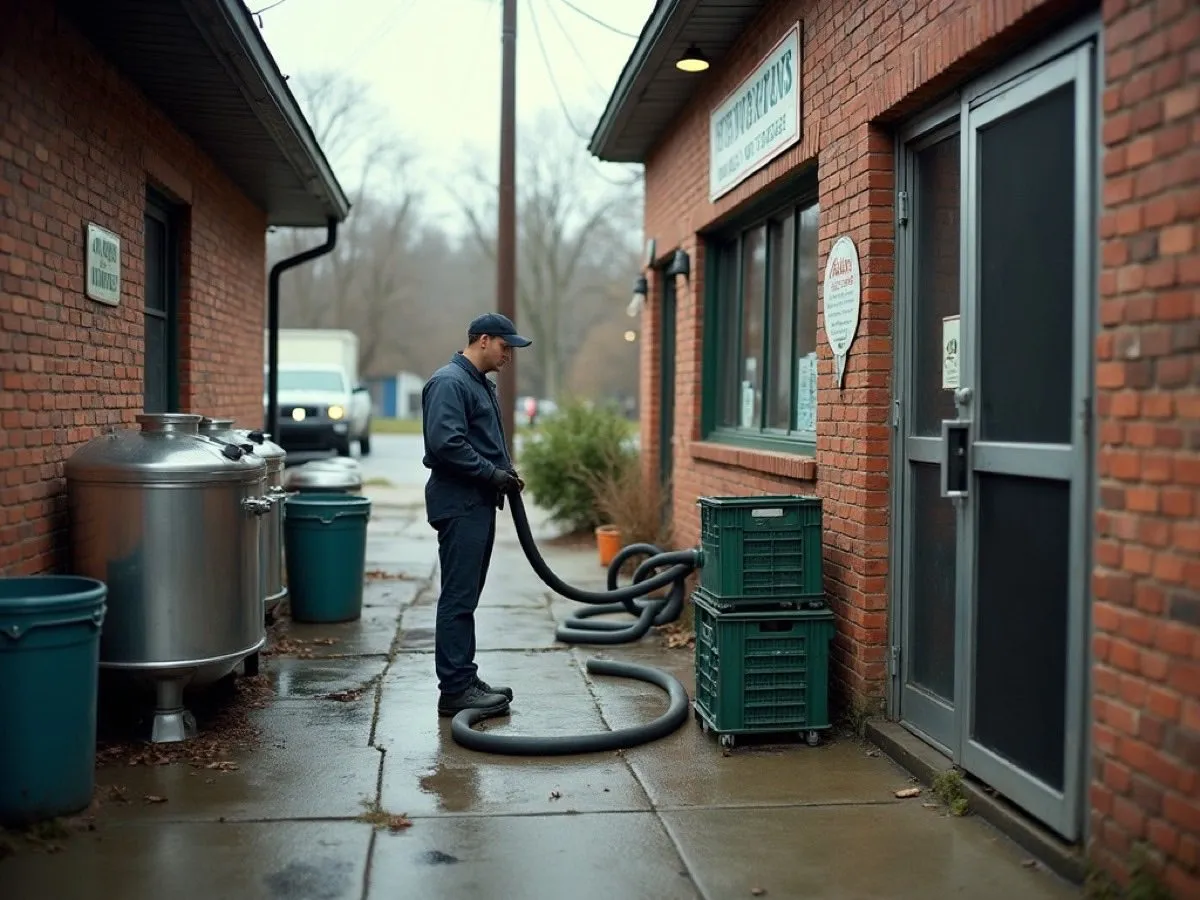
A grease trap is easy to forget — right up until a floor drain backs up during a Friday dinner rush, or an inspector asks for pumping records you don't have. We handle grease trap pumping in New Bern, NC for restaurants and commercial kitchens across Craven County, pumped and documented on a schedule built around your kitchen's volume.
Why Grease Traps Overflow
Every fryer, flat-top, and three-compartment sink sends fats, oils, and grease down the drain. That FOG cools, hardens, and floats to the top of the trap while food solids sink to the bottom. The trap only works while there's room for water to pass between those two layers.
Most overflows we see trace back to three things: a pump-out schedule that slipped, a trap that's undersized for the kitchen feeding it, or staff rinsing pans with hot water, which carries liquid grease straight through the trap before it can cool and separate out.
Grease Trap Pumping in New Bern, NC: How Often?
There's no single right interval. It depends on trap size and how much grease your kitchen produces. As a working baseline:
- Small indoor traps (under-sink and floor units): monthly for most kitchens, more often for high-volume operations.
- Outdoor in-ground interceptors: typically every one to three months.
- The 25% rule: whatever the calendar says, pump before grease and solids fill a quarter of the trap's liquid depth. Past that point, the trap stops separating and starts passing grease downstream.
We'll look at your trap on the first visit, recommend an interval based on what we find, and adjust once we see how fast it actually fills.
Compliance Without the Headache
Sewer utilities across North Carolina regulate fats, oils, and grease because hardened FOG clogs public mains, and what leaves your kitchen ends up in city lines and at the treatment plant. Inspectors and utilities commonly ask food-service businesses for proof of regular trap service.
We document every visit: date, trap condition, gallons pumped. When someone asks for records, you hand them over and get back to work. For the exact requirements that apply to your address, your sewer provider is the final word. We keep you pumped and papered either way.
Recurring Service: Set It and Forget It
Most of our commercial customers go on a standing schedule. We show up at the agreed interval, pump the full trap (liquid, grease cap, and the solids on the bottom, not a skim job), note the condition, and leave the paperwork. Nobody on your staff has to remember to call.
If a holiday weekend or festival season fills the trap early, call and we'll move the visit up. And if your building sits outside city sewer on its own system, we can handle septic tank pumping on the same stop and save you a second trip charge.
Trap already overflowing? Our emergency septic pumping crews handle commercial grease emergencies too, with same-day and next-day appointments available.
What it costs: most grease trap pump-outs in the New Bern area run about $150–$600 depending on trap size and access: small indoor traps at the low end, large outdoor interceptors at the high end. The price we quote is the price you pay, every visit.
We serve commercial kitchens across New Bern and Craven County, from downtown to Havelock. Call to set up your first pump-out and get a schedule that keeps the health inspector (and your floor drains) happy.