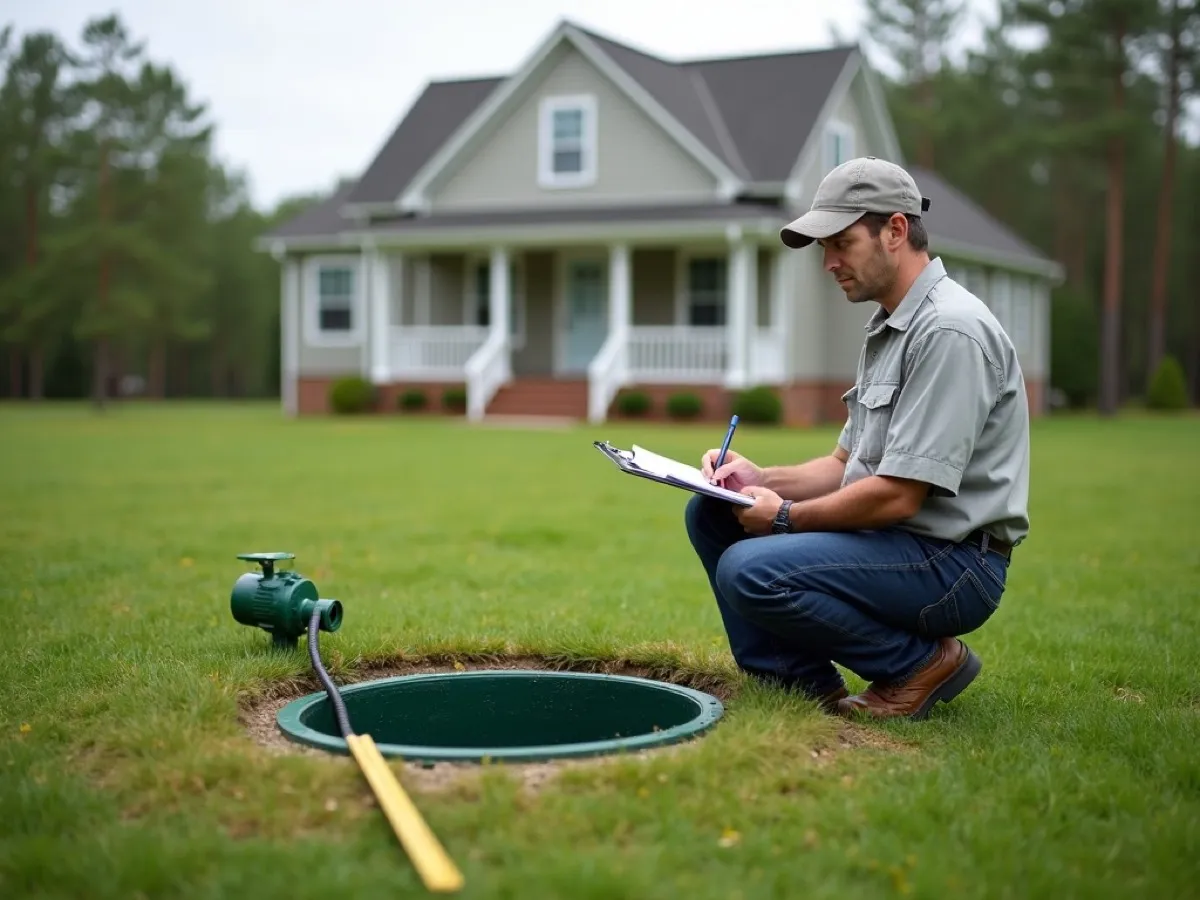
Buying a house on septic in Craven County? That system in the backyard can be one of the most expensive parts of the property, and the easiest to overlook during a sale. A failed drain field can cost more than a new roof.
A septic inspection in New Bern, NC tells you what you're actually getting before you sign. We inspect for buyers, sellers, and homeowners who just want to know where their system stands.
What a Septic Inspection Covers
We go through the whole system, not just the tank:
- Tank location and access: confirming where it is and how it's reached
- Tank condition: cracks, root intrusion, and water level (a level above or below normal each tells its own story)
- Sludge and scum layers: measured to show whether the tank is overdue for pumping
- Inlet and outlet baffles: the parts that keep solids out of your drain field
- Effluent filter: present, missing, or clogged
- Distribution box and drain field: soggy ground, surfacing wastewater, odors, and suspiciously bright green grass
- Pumps, floats, and alarms on pump-assisted systems
One thing worth knowing: a quick "walkover" glance at the lids isn't an inspection. The useful information lives inside the tank and out at the drain field, and that's where we spend our time.
When Do You Need a Septic Inspection in New Bern, NC?
Buying a home is the big one. North Carolina doesn't require a septic inspection to sell a house, but lenders and buyers commonly ask for one, and since NC House Bill 688, any septic inspection done as part of a real estate transaction must be performed by an inspector certified by the NC On-Site Wastewater Contractors and Inspectors Certification Board. Whoever you hire, confirm that certification first. And schedule early in your due-diligence window. If the inspection turns something up, you want time to negotiate repairs or price before closing.
Selling? A pre-listing inspection lets you fix small problems before a buyer's inspector finds them and uses them at the negotiating table.
Already own the home? A routine check every few years catches failing baffles and rising sludge before they wreck a drain field. And if your system uses an effluent pump, North Carolina rules have the county health department inspecting it every five years anyway. It pays to know your system's condition before they do.
What Buyers Should Ask the Seller For
- System age and permits. Craven County septic permits can be looked up through the county GIS site by address or parcel. Our Craven County septic permit guide shows exactly how.
- Pumping history. Receipts or company names. "We never had to pump it" is a red flag, not a feature.
- Repair records. Past drain field work, replaced pumps, added risers.
- Where everything is. Tank, drain field, and any repair area marked on a plat or sketch.
For the full checklist (including questions about household size and system capacity), read our septic inspection guide for home buyers.
Why drain fields fail around here: the soil series named for this county (Craven) has a firm clay subsoil and a seasonal water table only about 24–36 inches down from December through April. That's exactly the depth drain field trenches sit at. It's why the drain field portion of an inspection matters more in New Bern than almost anywhere else in the state.
A Written Report, at One Flat Price
Every inspection ends with a written report in plain English: what we checked, what we found, what needs attention now, and what can wait. No vague verbal "looks fine" — you get something you can hand to a lender, an agent, or the seller's attorney. Reports typically go out within a day or two of the visit.
Pricing is flat and quoted before we come out. Routine maintenance inspections in North Carolina generally run about $100–$300; real-estate inspections vary with system type, so we quote those individually. And the price we quote is the price you pay.
If the tank turns out to be overdue, we can pump it during the same visit so we can see the walls and baffles clearly, and you only pay for one trip.