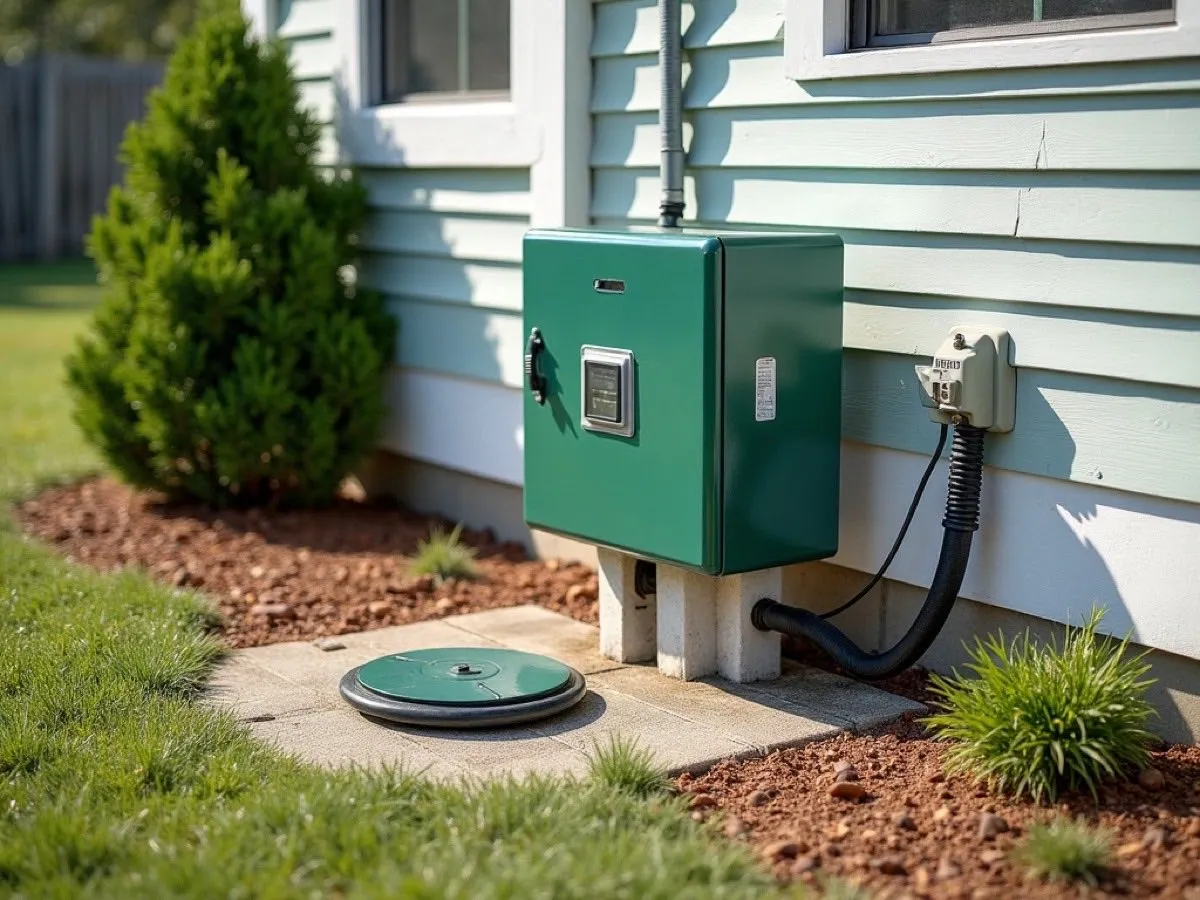
Plenty of homes in New Bern are technically on city sewer and still have a septic tank in the yard. If there's a tank lid out back and a small alarm box on the side of your house, you're one of the city's STEP customers, and part of the system's upkeep is yours. Here's how STEP system service in New Bern actually works: what the city covers, what you cover, and where we fit in.
What a STEP System Is
STEP stands for Septic Tank Effluent Pump. Instead of a gravity line running straight to the sewer main, your home has its own septic tank, a pump, and a control panel. Solids settle and stay in the tank. The liquid (effluent) gets pumped through a small pressure line into the city's sewer mains and on to the wastewater treatment plant.
There's no drain field. The city's lines do the job a drain field would do on a rural system. Floats inside the tank tell the pump when to run, and if the level gets too high or too low, the alarm box on your house sounds off with a high-pitched buzz, a lot like a smoke alarm.
Why STEP System Service in New Bern Falls Partly on You
The City of New Bern splits STEP responsibilities, and its customer brochure spells out exactly who owns what:
| The city maintains | You're responsible for |
|---|---|
| Pumps and floats | Plumbing from the house to the tank |
| The alarm box | Electricity for the pump and controls |
| Pressure equipment | Keeping lids and the alarm box accessible |
| The line from your tank to the sewer main | Reporting alarms and conserving water during one |
| Routine maintenance of city equipment | Pumping solids from the tank every 5 years |
That last item is the one most STEP owners miss. The city's own brochure tells owners to pump solids from the septic tank every five years to keep them from entering the sewer system. The city won't schedule that pump-out for you. It's your job — and it's exactly the job we do.
STEP Tank Pumping: What's Included
A STEP pump-out works much like standard septic tank pumping. We locate and open the tank, remove the settled solids and floating scum, and check the lid and riser condition while we're in there. We work carefully around the pump equipment and leave city-owned components alone: pumps, floats, and panels are the city's to maintain, and damage caused by a homeowner or their contractor lands on the owner's bill.
If we spot something on the city's side that doesn't look right, we'll tell you so you can report it to Water Resources at (252) 639-7541.
Float and Alarm Basics
When the alarm sounds, do three things. Silence it: press the red-lit button, or the hand-print panel on newer boxes. Call the city right away: (252) 639-7541 on weekdays during business hours, or (252) 636-4070 after hours, weekends, and holidays. Then cut your water use hard. A STEP tank only stores about one extra day of normal wastewater for a family of three, so shorter showers, no laundry, and minimal flushing buy the repair crew time.
Skipped pump-outs make alarms more likely. As solids build up, they crowd the tank, foul the floats, and can ride out into the pump and the city's lines, the exact problem the five-year pump-out exists to prevent.
Keep the Lid and Alarm Box Clear
The city requires tank riser lids to stay visible (not buried under sod, shrubs, or bark) with 24 inches of clearance, and alarm boxes need 3 feet of clearance with no shrubs or fences against them. Anything blocking access can be removed, so it pays to keep that corner of the yard simple. Clear access makes your pump-out faster, too.
What Not to Send Down the Drain
STEP tanks have a do-not-flush list like any septic tank: wipes, diapers, paper towels, grease, coffee grounds, eggshells, dental floss, feminine products. Nothing but wastewater and toilet paper. The city's brochure also says to limit or skip the garbage disposal. And here's the part that stings: if improper material forces extra cleaning or maintenance, the city can bill that cost directly to you. Our guide to what not to flush covers the full list and the reasons behind it.
STEP tank pump-out pricing: most run about $300–$500, in line with standard residential tanks, and the city's guidance is once every five years. We quote your exact price before we schedule. The price we quote is the price you pay.
Whether your tank is overdue or you just bought a STEP home with no record of its last service, we can check the solids level and set you up on a five-year cycle. Same-day and next-day appointments available across New Bern. Wondering how that compares for homes with a drain field? See how often septic tanks need pumping.